Database schema
This is the single reference for Athlora's database schema. It is derived from every SQL migration in backend/src/db/migrations/ through 0046_session_finalization_jobs.sql. The migrations remain the executable source of truth; use this page together with them when a tool needs an ERD or schema analysis.
PostgreSQL 13+ is required because the schema uses gen_random_uuid(). Types below use PostgreSQL names. PK means primary key, FK means foreign key, UQ means unique constraint or unique index, and NULL means nullable.
Entity relationship diagram
Open the SVG ERD for a zoomable version.
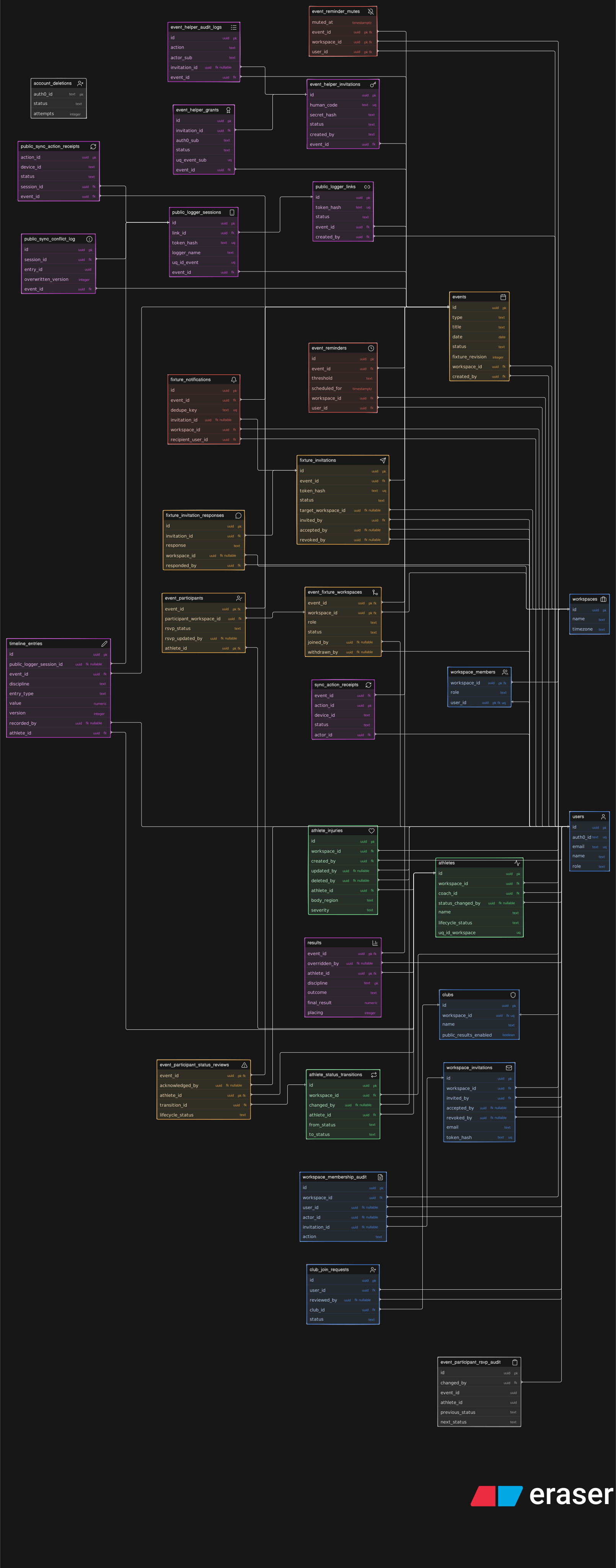
The diagram shows only the Stage-1 core schema, not the full schema documented on this page. The tables documented below are authoritative for the multi-discipline catalogue, sessions, entrants, branding, and sync model.
Relationship summary
- A
clubmaps one-to-one to aworkspace. - A
workspacehas one or moreworkspace_members, but a user can belong to only one workspace. - Athletes, events, injuries, reminders, and notifications are workspace-scoped.
- Events own fixture participation, invitations, participants, live-log entries, results, helpers, public logger links, and offline-sync receipts.
timeline_entriesare created by exactly one actor: either an authenticatedusersrow or apublic_logger_sessionsrow.- Results are materialized from the timeline and are unique per event, athlete, and discipline.
- A user's dashboard preferences are stored per
(user, workspace)pair. athlete_preferred_disciplinesrepresents current assignments;athlete_discipline_assignmentspreserves every discipline ever assigned so historical performance remains discoverable.- Catalogue-backed meets group entrants into
discipline_sessionsthroughsession_entrants, withsession_timeline_entriesand onesession_resultsrow per (session, entrant). - Generic-session completion uses one durable
session_finalization_jobsrow per session.
Final relational schema
Identity, workspace, and club tables
users
  id UUID PK DEFAULT gen_random_uuid()
  auth0_id TEXT UQ NOT NULL
  name TEXT NOT NULL
  email TEXT UQ NOT NULL
  role TEXT NOT NULL DEFAULT 'coach' CHECK ('coach', 'assistant')
  consent_accepted_at TIMESTAMPTZ NULL
  consent_version TEXT NULL
  created_at TIMESTAMPTZ NOT NULL DEFAULT now()
  updated_at TIMESTAMPTZ NOT NULL DEFAULT now()

workspaces
  id UUID PK DEFAULT gen_random_uuid()
  name TEXT NOT NULL
  timezone TEXT NOT NULL DEFAULT 'UTC'
    CHECK (IANA-style region/city value or 'UTC')
  created_at TIMESTAMPTZ NOT NULL DEFAULT now()
  updated_at TIMESTAMPTZ NOT NULL DEFAULT now()

workspace_members
  workspace_id UUID PK, FK -> workspaces.id ON DELETE CASCADE
  user_id UUID PK, FK -> users.id ON DELETE CASCADE, UQ
  role TEXT NOT NULL DEFAULT 'coach' CHECK ('coach', 'assistant')
  created_at TIMESTAMPTZ NOT NULL DEFAULT now()
  updated_at TIMESTAMPTZ NOT NULL DEFAULT now()

workspace_invitations
  id UUID PK DEFAULT gen_random_uuid()
  workspace_id UUID FK -> workspaces.id ON DELETE CASCADE
  email TEXT NOT NULL
  role TEXT NOT NULL CHECK ('coach', 'assistant')
  token_hash TEXT UQ NOT NULL
  invited_by UUID FK -> users.id
  expires_at TIMESTAMPTZ NOT NULL
  accepted_at TIMESTAMPTZ NULL
  accepted_by UUID FK -> users.id NULL
  revoked_at TIMESTAMPTZ NULL
  revoked_by UUID FK -> users.id NULL
  created_at TIMESTAMPTZ NOT NULL DEFAULT now()

workspace_membership_audit
  id UUID PK DEFAULT gen_random_uuid()
  workspace_id UUID FK -> workspaces.id ON DELETE CASCADE
  user_id UUID FK -> users.id NULL
  actor_id UUID FK -> users.id NULL
  invitation_id UUID FK -> workspace_invitations.id NULL
  action TEXT NOT NULL CHECK ('invited', 'resent', 'accepted', 'revoked', 'removed', 'role_changed')
  role TEXT NULL CHECK ('coach', 'assistant')
  created_at TIMESTAMPTZ NOT NULL DEFAULT now()

clubs
  id UUID PK DEFAULT gen_random_uuid()
  workspace_id UUID FK -> workspaces.id ON DELETE CASCADE, UQ
  name TEXT NOT NULL
  description TEXT NULL CHECK (length(description) <= 500)
  primary_color TEXT NULL CHECK (primary_color ~ '^#[0-9A-Fa-f]{6}$')
  logo_key TEXT NULL
  logo_content_type TEXT NULL
  logo_byte_size INTEGER NULL CHECK (logo_byte_size IS NULL OR logo_byte_size > 0 AND logo_byte_size <= 5242880)
  cover_key TEXT NULL
  cover_content_type TEXT NULL
  cover_byte_size INTEGER NULL CHECK (cover_byte_size IS NULL OR cover_byte_size > 0 AND cover_byte_size <= 5242880)
  public_results_enabled BOOLEAN NOT NULL DEFAULT false
  public_schedule_enabled BOOLEAN NOT NULL DEFAULT false
  created_at TIMESTAMPTZ NOT NULL DEFAULT now()
  updated_at TIMESTAMPTZ NOT NULL DEFAULT now()

club_join_requests
  id UUID PK DEFAULT gen_random_uuid()
  club_id UUID FK -> clubs.id ON DELETE CASCADE
  user_id UUID FK -> users.id ON DELETE CASCADE
  status TEXT NOT NULL DEFAULT 'pending' CHECK ('pending', 'approved', 'rejected', 'withdrawn')
  reviewed_by UUID FK -> users.id NULL
  reviewed_at TIMESTAMPTZ NULL
  created_at TIMESTAMPTZ NOT NULL DEFAULT now()
  updated_at TIMESTAMPTZ NOT NULL DEFAULT now()
  CHECK: reviewed_at is present exactly for approved/rejected requests
  UQ partial: one pending request per (club_id, user_id)

user_preferences
  user_id UUID PK, FK -> users.id ON DELETE CASCADE
  workspace_id UUID PK, FK -> workspaces.id ON DELETE CASCADE
  dashboard_card_order JSONB NOT NULL DEFAULT '[]'
  dashboard_hidden_cards JSONB NOT NULL DEFAULT '[]'
  dashboard_saved_filters JSONB NOT NULL DEFAULT '[]'
  created_at TIMESTAMPTZ NOT NULL DEFAULT now()
  updated_at TIMESTAMPTZ NOT NULL DEFAULT now()

account_deletions
  auth0_id TEXT PK
  status TEXT NOT NULL CHECK ('pending', 'failed', 'completed')
  attempts INTEGER NOT NULL DEFAULT 0
  next_attempt_at TIMESTAMPTZ NULL
  last_error TEXT NULL
  requested_at TIMESTAMPTZ NOT NULL DEFAULT now()
  updated_at TIMESTAMPTZ NOT NULL DEFAULT now()
  completed_at TIMESTAMPTZ NULL
Athletes, lifecycle, and injuries
athletes
  id UUID PK DEFAULT gen_random_uuid()
  coach_id UUID FK -> users.id
  workspace_id UUID FK -> workspaces.id NOT NULL
  name TEXT NOT NULL
  dob DATE NULL
  gender TEXT NULL
  notes TEXT NULL
  archived_at TIMESTAMPTZ NULL
  lifecycle_status TEXT NOT NULL DEFAULT 'active'
    CHECK ('active', 'inactive', 'archived')
  status_changed_at TIMESTAMPTZ NOT NULL DEFAULT now()
  status_changed_by UUID FK -> users.id NULL
  created_at TIMESTAMPTZ NOT NULL DEFAULT now()
  updated_at TIMESTAMPTZ NOT NULL DEFAULT now()
  UQ (id, workspace_id)                   -- composite target for workspace-safe FKs

athlete_preferred_disciplines
  athlete_id UUID PK, FK -> athletes.id ON DELETE CASCADE
  discipline_definition_id UUID PK, FK -> discipline_definitions.id ON DELETE RESTRICT
  created_at TIMESTAMPTZ NOT NULL DEFAULT now()

athlete_discipline_assignments                -- append-only discipline history (0045)
  athlete_id UUID PK, FK -> athletes.id ON DELETE CASCADE
  discipline_definition_id UUID PK, FK -> discipline_definitions.id ON DELETE RESTRICT
  assigned_at TIMESTAMPTZ NOT NULL DEFAULT now()
  index: (discipline_definition_id)

athlete_season_goals
  id UUID PK DEFAULT gen_random_uuid()
  athlete_id UUID FK -> athletes.id ON DELETE CASCADE
  discipline_definition_id UUID FK -> discipline_definitions.id ON DELETE RESTRICT
  target_value NUMERIC NOT NULL CHECK (> 0)
  target_unit TEXT NOT NULL CHECK ('seconds', 'metres', 'cm')
  target_date DATE NULL
  status TEXT NOT NULL CHECK ('active', 'completed')
  created_at TIMESTAMPTZ NOT NULL DEFAULT now()
  updated_at TIMESTAMPTZ NOT NULL DEFAULT now()

athlete_status_transitions
  id UUID PK DEFAULT gen_random_uuid()
  workspace_id UUID FK -> workspaces.id ON DELETE CASCADE
  athlete_id UUID NOT NULL
  from_status TEXT NULL CHECK ('active', 'inactive', 'archived')
  to_status TEXT NOT NULL CHECK ('active', 'inactive', 'archived')
  changed_by UUID FK -> users.id ON DELETE SET NULL, NULL
  changed_at TIMESTAMPTZ NOT NULL DEFAULT now()
  FK (athlete_id, workspace_id) -> athletes(id, workspace_id) ON DELETE CASCADE

athlete_injuries
  id UUID PK DEFAULT gen_random_uuid()
  workspace_id UUID FK -> workspaces.id ON DELETE CASCADE
  athlete_id UUID NOT NULL
  body_region TEXT NOT NULL CHECK ('Head & Neck', 'Torso', 'Arm', 'Leg')
  area TEXT NOT NULL
  side TEXT NOT NULL CHECK ('Left', 'Right', 'Both', 'Center')
  severity TEXT NOT NULL CHECK ('Minor', 'Moderate', 'Severe')
  notes TEXT NULL
  occurrence_date DATE NULL
  expected_return_date DATE NULL
  resolved_date TIMESTAMPTZ NULL
  resolution_notes TEXT NULL
  created_by UUID FK -> users.id
  updated_by UUID FK -> users.id NULL
  created_at TIMESTAMPTZ NOT NULL DEFAULT now()
  updated_at TIMESTAMPTZ NOT NULL DEFAULT now()
  deleted_at TIMESTAMPTZ NULL
  deleted_by UUID FK -> users.id NULL
  FK (athlete_id, workspace_id) -> athletes(id, workspace_id) ON DELETE CASCADE
  CHECK: when occurrence_date is present, expected return and resolution cannot precede it
Events, fixtures, participants, and RSVP audit
events
  id UUID PK DEFAULT gen_random_uuid()
  created_by UUID FK -> users.id
  workspace_id UUID FK -> workspaces.id NOT NULL
  type TEXT NOT NULL CHECK ('competition', 'training')
  discipline TEXT NULL
  title TEXT NOT NULL
  date DATE NOT NULL
  time TIME NULL
  location_name TEXT NULL
  latitude NUMERIC(9,6) NULL
  longitude NUMERIC(9,6) NULL
  timezone TEXT NULL
  status TEXT NOT NULL DEFAULT 'scheduled'
    CHECK ('scheduled', 'in_progress', 'completed', 'cancelled')
  fixture_revision INTEGER NOT NULL DEFAULT 1 CHECK (> 0)
  created_at TIMESTAMPTZ NOT NULL DEFAULT now()
  updated_at TIMESTAMPTZ NOT NULL DEFAULT now()
  archived_at TIMESTAMPTZ NULL

event_fixture_workspaces
  event_id UUID PK, FK -> events.id ON DELETE CASCADE
  workspace_id UUID PK, FK -> workspaces.id ON DELETE RESTRICT
  role TEXT NOT NULL CHECK ('host', 'guest')
  status TEXT NOT NULL DEFAULT 'accepted'
    CHECK ('accepted', 'reacceptance_required', 'withdrawn')
  accepted_revision INTEGER NOT NULL DEFAULT 1 CHECK (> 0)
  contact_email TEXT NULL
  joined_by UUID FK -> users.id ON DELETE SET NULL, NULL
  joined_at TIMESTAMPTZ NOT NULL DEFAULT now()
  withdrawn_at TIMESTAMPTZ NULL
  withdrawn_by UUID FK -> users.id ON DELETE SET NULL, NULL
  CHECK: hosts have no contact email; guests require one
  UQ partial: one host per event

fixture_invitations
  id UUID PK DEFAULT gen_random_uuid()
  event_id UUID FK -> events.id ON DELETE CASCADE
  target_workspace_id UUID FK -> workspaces.id ON DELETE RESTRICT, NULL
  email TEXT NULL                          -- legacy email invitations; targeted invitations need no email
  revision INTEGER NOT NULL CHECK (> 0)
  token_hash TEXT UQ NOT NULL
  status TEXT NOT NULL DEFAULT 'pending'
    CHECK ('pending', 'accepted', 'declined', 'change_requested', 'revoked')
  invited_by UUID FK -> users.id ON DELETE RESTRICT
  expires_at TIMESTAMPTZ NOT NULL
  accepted_at TIMESTAMPTZ NULL
  accepted_by UUID FK -> users.id ON DELETE SET NULL, NULL
  revoked_at TIMESTAMPTZ NULL
  revoked_by UUID FK -> users.id ON DELETE SET NULL, NULL
  created_at TIMESTAMPTZ NOT NULL DEFAULT now()
  CHECK: accepted_at exists exactly when status is accepted
  CHECK: revoked_at exists exactly when status is revoked

fixture_invitation_responses
  id UUID PK DEFAULT gen_random_uuid()
  invitation_id UUID FK -> fixture_invitations.id ON DELETE CASCADE
  revision INTEGER NOT NULL CHECK (> 0)
  workspace_id UUID FK -> workspaces.id ON DELETE RESTRICT, NULL
  response TEXT NOT NULL CHECK ('accepted', 'declined', 'change_requested')
  message TEXT NULL
  responded_by UUID FK -> users.id ON DELETE RESTRICT
  created_at TIMESTAMPTZ NOT NULL DEFAULT now()
  CHECK: message exists exactly when response is change_requested

event_participants
  event_id UUID PK, FK -> events.id
  athlete_id UUID PK, FK -> athletes.id
  participant_workspace_id UUID NOT NULL
  rsvp_status TEXT NOT NULL DEFAULT 'pending' CHECK ('pending', 'yes', 'no', 'maybe')
  rsvp_updated_at TIMESTAMPTZ NOT NULL DEFAULT now()
  rsvp_updated_by UUID FK -> users.id NULL
  FK (athlete_id, participant_workspace_id) -> athletes(id, workspace_id) ON DELETE RESTRICT
  FK (event_id, participant_workspace_id) -> event_fixture_workspaces(event_id, workspace_id) ON DELETE RESTRICT

event_participant_rsvp_audit
  id UUID PK DEFAULT gen_random_uuid()
  event_id UUID NOT NULL                  -- intentionally no declared FK
  athlete_id UUID NOT NULL                -- intentionally no declared FK
  previous_status TEXT NOT NULL
  next_status TEXT NOT NULL
  changed_by UUID FK -> users.id
  changed_at TIMESTAMPTZ NOT NULL DEFAULT now()
  batch_id UUID NULL

event_participant_status_reviews
  event_id UUID PK, FK -> events.id ON DELETE CASCADE
  athlete_id UUID PK, FK -> athletes.id ON DELETE CASCADE
  transition_id UUID FK -> athlete_status_transitions.id ON DELETE CASCADE
  lifecycle_status TEXT NOT NULL CHECK ('active', 'inactive', 'archived')
  flagged_at TIMESTAMPTZ NOT NULL DEFAULT now()
  acknowledged_at TIMESTAMPTZ NULL
  acknowledged_by UUID FK -> users.id ON DELETE SET NULL, NULL
Generic meet entrants
meet_entrants
  id UUID PK DEFAULT gen_random_uuid()
  event_id UUID NOT NULL
  workspace_id UUID NOT NULL
  kind TEXT NOT NULL CHECK ('athlete', 'guest', 'relay')
  athlete_id UUID NULL
  name TEXT NOT NULL CHECK (trimmed length 1..120)
  club_name TEXT NULL CHECK (trimmed length 1..120 when present)
  details TEXT NULL CHECK (trimmed length 1..2000 when present)
  created_by UUID FK -> users.id
  created_at TIMESTAMPTZ NOT NULL DEFAULT now()
  UQ (id, event_id, workspace_id); UQ partial (event_id, athlete_id) when athlete_id is present
  FK (event_id, workspace_id) -> event_fixture_workspaces(event_id, workspace_id)
  FK (athlete_id, workspace_id) -> athletes(id, workspace_id)
  CHECK: athlete_id is present exactly when kind is 'athlete'
  CHECK: club_name and details are null unless kind is 'guest'
Multi-discipline catalogue, sessions, and meet audit
discipline_definitions                         -- immutable catalogue rows (0028 + 0029/0030/0031/0034 seeds)
  id UUID PK DEFAULT gen_random_uuid()
  code TEXT NOT NULL CHECK (matches ^[a-z0-9][a-z0-9_]*$)
  version INTEGER NOT NULL CHECK (> 0)
  kind TEXT NOT NULL CHECK ('track', 'field', 'relay', 'vertical')
  unit TEXT NOT NULL CHECK ('seconds', 'metres', 'cm')
  direction TEXT NOT NULL CHECK ('lower', 'higher')
  default_rules JSONB NOT NULL CHECK (object; aggregation 'timed' | 'best' | 'vertical'; entrantType 'individual' | 'relay')
  precision INTEGER NOT NULL CHECK (0..6)
  presentation JSONB NOT NULL CHECK (object with a label)
  created_at TIMESTAMPTZ NOT NULL DEFAULT now()
  source TEXT NOT NULL                          -- seeding migration name
  UQ (code, version)
  CHECK: unit 'seconds' pairs with direction 'lower'; 'metres'/'cm' pair with 'higher'
  trigger: UPDATE and DELETE raise an exception (insert a new version instead)

discipline_sessions
  id UUID PK DEFAULT gen_random_uuid()
  event_id UUID NOT NULL
  workspace_id UUID NOT NULL
  discipline_definition_id UUID FK -> discipline_definitions.id ON DELETE RESTRICT
  label TEXT NOT NULL CHECK (trimmed length 1..120)
  status TEXT NOT NULL DEFAULT 'scheduled' CHECK ('scheduled', 'in_progress', 'completed', 'cancelled')
  version INTEGER NOT NULL DEFAULT 1 CHECK (> 0)
  vertical_config JSONB NULL CHECK (object when present)
  result_state TEXT NOT NULL DEFAULT 'provisional' CHECK ('provisional', 'final', 'reopened')
  created_by UUID FK -> users.id
  updated_by UUID FK -> users.id
  created_at TIMESTAMPTZ NOT NULL DEFAULT now()
  updated_at TIMESTAMPTZ NOT NULL DEFAULT now()
  UQ (id, event_id)                            -- target for session composite FKs
  FK (event_id, workspace_id) -> events(id, workspace_id) ON DELETE RESTRICT
  CHECK: result_state 'final' requires status 'completed'
  index: (event_id, created_at, id)

session_entrants
  id UUID PK DEFAULT gen_random_uuid()
  event_id UUID NOT NULL
  session_id UUID NOT NULL
  entrant_id UUID NOT NULL
  workspace_id UUID NOT NULL
  withdrawn_at TIMESTAMPTZ NULL
  withdrawn_by UUID FK -> users.id NULL
  created_by UUID FK -> users.id
  created_at TIMESTAMPTZ NOT NULL DEFAULT now()
  UQ (session_id, entrant_id); UQ (event_id, session_id, entrant_id); UQ (event_id, session_id, entrant_id, workspace_id)
  FK (session_id, event_id) -> discipline_sessions(id, event_id) ON DELETE RESTRICT
  FK (entrant_id, event_id, workspace_id) -> meet_entrants(id, event_id, workspace_id) ON DELETE RESTRICT
  CHECK: withdrawn_at is present exactly when withdrawn_by is present

relay_members
  id UUID PK DEFAULT gen_random_uuid()
  event_id UUID NOT NULL
  workspace_id UUID NOT NULL
  relay_id UUID NOT NULL                       -- a meet_entrants row with kind 'relay'
  relay_kind TEXT NOT NULL DEFAULT 'relay' CHECK (= 'relay')
  member_id UUID NOT NULL                      -- a meet_entrants row with kind 'athlete' or 'guest'
  member_kind TEXT NOT NULL CHECK ('athlete', 'guest')
  leg INTEGER NOT NULL CHECK (> 0)
  created_by UUID FK -> users.id
  created_at TIMESTAMPTZ NOT NULL DEFAULT now()
  UQ (relay_id, leg); UQ (relay_id, member_id); UQ (id, relay_id)
  FK (relay_id, event_id, workspace_id, relay_kind) -> meet_entrants(id, event_id, workspace_id, kind) ON DELETE RESTRICT
  FK (member_id, event_id, workspace_id, member_kind) -> meet_entrants(id, event_id, workspace_id, kind) ON DELETE RESTRICT

session_timeline_entries
  id UUID PK DEFAULT gen_random_uuid()
  event_id UUID NOT NULL
  session_id UUID NOT NULL
  entrant_id UUID NOT NULL
  workspace_id UUID NOT NULL
  entry_type TEXT NOT NULL CHECK ('attempt', 'split', 'penalty', 'note')
  value NUMERIC NULL CHECK (> 0 and finite)
  unit TEXT NULL CHECK ('seconds', 'metres', 'cm')
  is_foul BOOLEAN NOT NULL DEFAULT false
  incident_type TEXT NULL CHECK ('false_start', 'dq', 'dnf', 'dns', 'lane_infringement')
  vertical_state TEXT NULL CHECK ('clearance', 'failure', 'pass', 'void')
  attempt_order INTEGER NULL CHECK (> 0)
  note_text TEXT NULL CHECK (length <= 2000)
  recorded_by UUID FK -> users.id NULL
  recorded_workspace_id UUID FK -> workspaces.id NULL
  public_logger_session_id UUID NULL
  relay_member_id UUID NULL FK -> relay_members.id ON DELETE RESTRICT  -- member-scoped relay split
  version INTEGER NOT NULL DEFAULT 1 CHECK (> 0)
  device_id TEXT NULL
  created_at TIMESTAMPTZ NOT NULL DEFAULT now()
  updated_at TIMESTAMPTZ NOT NULL DEFAULT now()
  deleted_at TIMESTAMPTZ NULL
  FK (event_id, session_id, entrant_id, workspace_id) -> session_entrants(event_id, session_id, entrant_id, workspace_id) ON DELETE RESTRICT
  FK (public_logger_session_id, event_id) -> public_logger_sessions(id, event_id) ON DELETE RESTRICT
  UQ (id, event_id, session_id, entrant_id, workspace_id)  -- target for selected-entry FK
  UQ partial (session_id, entrant_id, attempt_order) when attempt_order IS NOT NULL
  CHECK: exactly one actor is present: recorded_by XOR public_logger_session_id
  CHECK: value is present exactly when unit is present
  CHECK: an 'attempt' entry carries a value, a foul, or an incident
  CHECK: vertical_state implies a metre 'attempt' with attempt_order, no foul, no incident
  CHECK (app-enforced): a relay split carries relay_member_id and never an incident or foul; a team-level value attempt never carries relay_member_id
  index: (session_id, entrant_id, created_at, id)

session_results
  id UUID PK DEFAULT gen_random_uuid()
  event_id UUID NOT NULL
  session_id UUID NOT NULL
  entrant_id UUID NOT NULL
  workspace_id UUID NOT NULL
  outcome TEXT NOT NULL CHECK ('no_result', 'valid', 'dq', 'dnf', 'dns')
  final_result NUMERIC NULL CHECK (> 0 and finite)
  unit TEXT NOT NULL CHECK ('seconds', 'metres', 'cm')
  manual_override NUMERIC NULL CHECK (> 0 and finite)
  override_reason TEXT NULL
  overridden_by UUID FK -> users.id NULL
  override_at TIMESTAMPTZ NULL
  selected_entry_id UUID FK -> session_timeline_entries.id ON DELETE RESTRICT
  final_place INTEGER NULL CHECK (> 0)
  version INTEGER NOT NULL DEFAULT 1 CHECK (> 0)
  created_at TIMESTAMPTZ NOT NULL DEFAULT now()
  updated_at TIMESTAMPTZ NOT NULL DEFAULT now()
  UQ (session_id, entrant_id)
  FK (event_id, session_id, entrant_id, workspace_id) -> session_entrants(event_id, session_id, entrant_id, workspace_id) ON DELETE RESTRICT
  FK (selected_entry_id, event_id, session_id, entrant_id, workspace_id) -> session_timeline_entries(id, event_id, session_id, entrant_id, workspace_id)
  CHECK: outcome 'valid' is present exactly when final_result is present
  CHECK: override fields are present all-or-none (reason, actor, timestamp with value)
  index: (workspace_id, entrant_id, session_id)

session_relay_selections
  event_id UUID NOT NULL
  session_id UUID NOT NULL
  entrant_id UUID NOT NULL                          -- the relay team (meet_entrants row)
  relay_member_id UUID NOT NULL
  workspace_id UUID NOT NULL
  entry_id UUID NOT NULL                            -- the coach-selected split for this athlete
  created_at TIMESTAMPTZ NOT NULL DEFAULT now()
  updated_at TIMESTAMPTZ NOT NULL DEFAULT now()
  PK (session_id, relay_member_id)                  -- one official leg per athlete per session
  FK (relay_member_id, entrant_id) -> relay_members(id, relay_id) ON DELETE RESTRICT
  FK (entry_id, event_id, session_id, entrant_id, workspace_id) -> session_timeline_entries(id, event_id, session_id, entrant_id, workspace_id) ON DELETE RESTRICT
  FK (event_id, session_id, entrant_id, workspace_id) -> session_entrants(event_id, session_id, entrant_id, workspace_id) ON DELETE RESTRICT
  index: (event_id, session_id, entrant_id)

session_finalization_jobs                     -- durable async completion work (0046)
  id UUID PK DEFAULT gen_random_uuid()
  event_id UUID FK -> events.id ON DELETE CASCADE
  session_id UUID FK -> discipline_sessions.id ON DELETE CASCADE, UQ
  workspace_id UUID FK -> workspaces.id ON DELETE CASCADE
  requested_by UUID FK -> users.id ON DELETE RESTRICT
  expected_version INTEGER NOT NULL CHECK (> 0)
  status TEXT NOT NULL CHECK ('pending', 'running', 'completed', 'failed')
  attempts INTEGER NOT NULL DEFAULT 0 CHECK (>= 0)
  error_message TEXT NULL
  created_at TIMESTAMPTZ NOT NULL DEFAULT now()
  started_at TIMESTAMPTZ NULL
  completed_at TIMESTAMPTZ NULL
  updated_at TIMESTAMPTZ NOT NULL DEFAULT now()
  index: (created_at) WHERE status = 'pending'

meet_domain_audit
  id UUID PK DEFAULT gen_random_uuid()
  event_id UUID NOT NULL
  workspace_id UUID NOT NULL
  entity_id UUID NOT NULL
  entity_type TEXT NOT NULL
  action TEXT NOT NULL
  actor_id UUID FK -> users.id NULL
  public_logger_session_id UUID NULL
  before_state JSONB NULL
  after_state JSONB NULL
  created_at TIMESTAMPTZ NOT NULL DEFAULT now()
  FK (event_id, workspace_id) -> event_fixture_workspaces(event_id, workspace_id) ON DELETE RESTRICT
  FK (public_logger_session_id, event_id) -> public_logger_sessions(id, event_id) ON DELETE RESTRICT
  CHECK: exactly one actor is present: actor_id XOR public_logger_session_id
  index: (event_id, entity_id, created_at)
Live logging, results, helpers, and offline synchronization
event_helper_invitations
  id UUID PK DEFAULT gen_random_uuid()
  event_id UUID FK -> events.id ON DELETE CASCADE
  secret_hash TEXT NOT NULL
  human_code TEXT UQ NOT NULL
  max_cap INTEGER NOT NULL DEFAULT 10 CHECK (1..50)
  status TEXT NOT NULL DEFAULT 'active' CHECK ('active', 'closed', 'revoked')
  created_by TEXT NOT NULL                 -- Auth0 subject, not a users FK
  created_at TIMESTAMPTZ NOT NULL DEFAULT now()
  updated_at TIMESTAMPTZ NOT NULL DEFAULT now()

event_helper_grants
  id UUID PK DEFAULT gen_random_uuid()
  invitation_id UUID FK -> event_helper_invitations.id ON DELETE CASCADE
  event_id UUID FK -> events.id ON DELETE CASCADE
  auth0_sub TEXT NOT NULL
  status TEXT NOT NULL DEFAULT 'active' CHECK ('active', 'revoked')
  redeemed_at TIMESTAMPTZ NOT NULL DEFAULT now()
  is_offline_logger BOOLEAN NOT NULL DEFAULT false
  offline_queue_device_id TEXT NULL
  UQ (event_id, auth0_sub)
  UQ partial: one active offline logger per event

event_helper_audit_logs
  id UUID PK DEFAULT gen_random_uuid()
  event_id UUID FK -> events.id ON DELETE CASCADE
  invitation_id UUID FK -> event_helper_invitations.id ON DELETE SET NULL, NULL
  action TEXT NOT NULL
  actor_sub TEXT NOT NULL
  details JSONB NULL
  created_at TIMESTAMPTZ NOT NULL DEFAULT now()

public_logger_links
  id UUID PK DEFAULT gen_random_uuid()
  event_id UUID FK -> events.id ON DELETE CASCADE
  token_hash TEXT UQ NOT NULL
  status TEXT NOT NULL DEFAULT 'active' CHECK ('active', 'revoked')
  created_by UUID FK -> users.id
  created_at TIMESTAMPTZ NOT NULL DEFAULT now()
  revoked_at TIMESTAMPTZ NULL

public_logger_sessions
  id UUID PK DEFAULT gen_random_uuid()
  link_id UUID FK -> public_logger_links.id ON DELETE CASCADE
  event_id UUID FK -> events.id ON DELETE CASCADE
  token_hash TEXT UQ NOT NULL
  logger_name TEXT NOT NULL
  logger_club TEXT NOT NULL
  expires_at TIMESTAMPTZ NOT NULL
  offline_device_id TEXT NULL
  created_at TIMESTAMPTZ NOT NULL DEFAULT now()
  UQ (id, event_id)                        -- target for timeline composite FK

timeline_entries
  id UUID PK DEFAULT gen_random_uuid()
  event_id UUID FK -> events.id
  athlete_id UUID FK -> athletes.id
  discipline TEXT NOT NULL
  entry_type TEXT NOT NULL CHECK ('attempt', 'split', 'penalty', 'note')
  value NUMERIC NULL CHECK (value >= 0 when present)
  unit TEXT NULL CHECK ('seconds', 'metres', 'cm')
  is_foul BOOLEAN NOT NULL DEFAULT false
  incident_type TEXT NULL CHECK ('false_start', 'dq', 'dnf', 'dns', 'lane_infringement')
  recorded_by UUID FK -> users.id NULL
  recorded_workspace_id UUID FK -> workspaces.id NULL
  public_logger_session_id UUID NULL
  note_text TEXT NULL
  version INTEGER NOT NULL DEFAULT 1
  device_id TEXT NULL
  created_at TIMESTAMPTZ NOT NULL DEFAULT now()
  updated_at TIMESTAMPTZ NOT NULL DEFAULT now()
  deleted_at TIMESTAMPTZ NULL
  FK (public_logger_session_id, event_id) -> public_logger_sessions(id, event_id)
  CHECK: exactly one actor is present: recorded_by XOR public_logger_session_id

results
  event_id UUID PK, FK -> events.id
  athlete_id UUID PK, FK -> athletes.id
  discipline TEXT PK
  outcome TEXT NOT NULL DEFAULT 'no_result' CHECK ('no_result', 'valid', 'dq', 'dnf', 'dns')
  final_result NUMERIC NULL CHECK (>= 0 when present)
  unit TEXT NULL
  placing INTEGER NULL CHECK (> 0 when present)
  is_pb BOOLEAN NOT NULL DEFAULT false
  is_sb BOOLEAN NOT NULL DEFAULT false
  manual_override NUMERIC NULL CHECK (>= 0 when present)
  override_reason TEXT NULL
  overridden_by UUID FK -> users.id NULL
  override_at TIMESTAMPTZ NULL
  updated_at TIMESTAMPTZ NOT NULL DEFAULT now()
  CHECK: dq/dnf/dns have no final_result
  CHECK: valid has final_result
  CHECK: no_result has no final_result

sync_action_receipts
  action_id UUID PK
  event_id UUID FK -> events.id ON DELETE CASCADE
  actor_id UUID FK -> users.id
  device_id TEXT NOT NULL
  action_type TEXT NOT NULL
  status TEXT NOT NULL CHECK ('accepted', 'rejected', 'duplicate')
  entry_id UUID NULL
  discipline_session_id UUID NULL
  entrant_id UUID NULL
  server_version INTEGER NULL
  error_code TEXT NULL
  client_timestamp TIMESTAMPTZ NULL
  processed_at TIMESTAMPTZ NOT NULL DEFAULT now()
  CHECK: discipline_session_id is present exactly when entrant_id is present
  FK (event_id, discipline_session_id, entrant_id) -> session_entrants(event_id, session_id, entrant_id)

public_sync_action_receipts
  action_id UUID PK
  session_id UUID FK -> public_logger_sessions.id ON DELETE CASCADE
  event_id UUID FK -> events.id ON DELETE CASCADE
  device_id TEXT NOT NULL
  action_type TEXT NOT NULL
  status TEXT NOT NULL CHECK ('accepted', 'rejected', 'duplicate')
  entry_id UUID NULL
  discipline_session_id UUID NULL
  entrant_id UUID NULL
  server_version INTEGER NULL
  error_code TEXT NULL
  client_timestamp TIMESTAMPTZ NULL
  processed_at TIMESTAMPTZ NOT NULL DEFAULT now()
  CHECK: discipline_session_id is present exactly when entrant_id is present
  FK (event_id, discipline_session_id, entrant_id) -> session_entrants(event_id, session_id, entrant_id)

public_sync_conflict_log
  id UUID PK DEFAULT gen_random_uuid()
  action_id UUID NOT NULL
  session_id UUID FK -> public_logger_sessions.id ON DELETE CASCADE
  event_id UUID FK -> events.id ON DELETE CASCADE
  entry_id UUID NOT NULL
  discipline_session_id UUID NULL
  entrant_id UUID NULL
  overwritten_version INTEGER NOT NULL
  overwritten_value NUMERIC NULL
  overwritten_incident TEXT NULL
  overwritten_note TEXT NULL
  winning_action_id UUID NOT NULL
  logged_at TIMESTAMPTZ NOT NULL DEFAULT now()
  CHECK: discipline_session_id is present exactly when entrant_id is present
  FK (event_id, discipline_session_id, entrant_id) -> session_entrants(event_id, session_id, entrant_id)

offline_sync_conflicts
  id UUID PK DEFAULT gen_random_uuid()
  event_id UUID FK -> events.id ON DELETE CASCADE
  discipline_session_id UUID NULL
  entrant_id UUID NULL
  entry_id UUID NULL
  actor_id UUID FK -> users.id NULL
  public_logger_session_id UUID FK -> public_logger_sessions.id NULL
  device_id TEXT NOT NULL
  action_id UUID NOT NULL
  action_type TEXT NOT NULL
  expected_version INTEGER NULL
  actual_version INTEGER NULL
  attempted_payload JSONB NOT NULL
  canonical_state JSONB NULL
  client_timestamp TIMESTAMPTZ NULL
  created_at TIMESTAMPTZ NOT NULL DEFAULT now()
  resolved_at TIMESTAMPTZ NULL
  resolved_by UUID FK -> users.id NULL
  resolution_reason TEXT NULL
  CHECK: exactly one actor is present: actor_id XOR public_logger_session_id
  CHECK: discipline_session_id is present exactly when entrant_id is present
  index: (event_id, discipline_session_id, created_at)
Notifications and reminders
fixture_notifications
  id UUID PK DEFAULT gen_random_uuid()
  recipient_user_id UUID FK -> users.id ON DELETE CASCADE
  workspace_id UUID FK -> workspaces.id ON DELETE CASCADE
  event_id UUID FK -> events.id ON DELETE CASCADE
  invitation_id UUID FK -> fixture_invitations.id ON DELETE SET NULL, NULL
  kind TEXT NOT NULL CHECK (
    'fixture_invited', 'fixture_responded', 'fixture_reacceptance_required',
    'fixture_started', 'event_coming_up', 'live_logger_started', 'event_ended'
  )
  payload JSONB NOT NULL DEFAULT '{}'
  dedupe_key TEXT NOT NULL
  read_at TIMESTAMPTZ NULL
  starred_at TIMESTAMPTZ NULL
  deleted_at TIMESTAMPTZ NULL
  created_at TIMESTAMPTZ NOT NULL DEFAULT now()
  UQ (recipient_user_id, workspace_id, dedupe_key)

event_reminders
  id UUID PK DEFAULT gen_random_uuid()
  user_id UUID FK -> users.id
  workspace_id UUID FK -> workspaces.id
  event_id UUID FK -> events.id
  event_version INTEGER NOT NULL DEFAULT 1
  threshold TEXT NOT NULL CHECK ('seven_days', 'one_day')
  scheduled_for TIMESTAMPTZ NOT NULL
  read_at TIMESTAMPTZ NULL
  invalidated_at TIMESTAMPTZ NULL
  invalidated_reason TEXT NULL
  created_at TIMESTAMPTZ NOT NULL DEFAULT now()
  UQ (user_id, event_id, event_version, threshold)

event_reminder_mutes
  user_id UUID PK, FK -> users.id
  workspace_id UUID PK, FK -> workspaces.id
  event_id UUID PK, FK -> events.id
  muted_at TIMESTAMPTZ NOT NULL DEFAULT now()
Important indexes and database automation
- Roster lookup:
athletes(workspace_id, lifecycle_status, lower(name)). - Event lookup:
events(created_by, status, date, time, created_at, id)and(status, date). - Archived events: partial
events(workspace_id, archived_at, date) WHERE archived_at IS NOT NULL. - Active event feed:
timeline_entries(event_id, created_at DESC, id DESC)wheredeleted_at IS NULL. - Result statistics:
results(athlete_id, discipline, event_id). - RSVP audit:
event_participant_rsvp_audit(event_id, athlete_id, changed_at DESC). - Unread reminders and notifications use partial indexes excluding read/invalidated or deleted rows.
- A database trigger creates one host
event_fixture_workspacesrecord whenever aneventsrow is inserted.
Migration inventory
Migrations apply in lexicographic filename order (backend/src/db/migrate.ts), and 0019_* and 0022_* each have two files, so the rows below follow that apply order rather than numeric order.
| Migration | Final schema change |
|---|---|
0001_init.sql | Base identity, athlete, event, participant, timeline, and result tables |
0002_contract_100m.sql | 100m constraints, outcome fields, archive and note columns |
0003_aggregate_indexes.sql | Statistics and dashboard lookup indexes |
0004_account_lifecycle.sql | Account-deletion tombstone |
0005_workspace_tenancy.sql | Workspaces and workspace-scoped athletes/events |
0006_workspace_roles_and_invitations.sql | Coach/assistant roles, invitations, membership audit |
0007_workspace_squads.sql | Squad/athlete-group tables (removed by 0041_remove_squads.sql) |
0008_athlete_lifecycle.sql | Athlete states, transition audit, participant reviews |
0009_intermediate_fixtures.sql | Fixture workspaces, invitations, responses, participant workspace ownership |
0010_fixture_workspace_status_index.sql | Non-unique fixture status index |
0011_athlete_injuries.sql | Injury records |
0012_audited_rsvps.sql | RSVP maybe state, attribution, and audit table |
0013_in_app_event_reminders.sql | Event reminders and reminder mutes |
0014_event_helper_invitations.sql | Event helper invitations, grants, and audit logs |
0015_optional_injury_dates.sql | Nullable injury occurrence date |
0016_public_logger_links.sql | Public logger links/sessions and timeline actor XOR relationship |
0017_clubs.sql | Clubs and club join requests |
0018_fixture_notifications.sql | In-app fixture notifications |
0019_offline_logger_designation.sql | Offline helper logger designation |
0019_targeted_fixture_invitations_and_single_membership.sql | Targeted invitations and one-workspace-per-user constraint |
0020_sync_idempotency.sql | Authenticated offline-sync receipts |
0021_user_consent.sql | User consent fields |
0022_notification_star_delete.sql | Notification star and soft-delete state |
0022_public_logger_offline_sync.sql | Public logger sync receipts and conflict log |
0023_event_lifecycle_notifications.sql | Additional notification kinds |
0024_public_club_statistics.sql | Club public-results setting |
0025_club_public_schedule_publication.sql | Independent club public-schedule setting |
0026_user_preferences.sql | Per-user dashboard card order, hidden cards, and saved filter presets |
0027_club_branding.sql | Club description, primary colour, logo, and cover media keys |
0028_multi_discipline_meet_foundation.sql - 0031_vertical_events_catalogue.sql | Immutable discipline catalogue and multi-discipline meet/session foundation; events.discipline = NULL identifies generic meets |
0032_athlete_disciplines_and_season_goals.sql | Athlete catalogue preferences and measurable private season goals |
0033_guest_entrant_details.sql | Nullable club name and private details for generic-meet entrants |
0034_relay_catalogue_and_official_entry.sql | Seeded 4x400m relay catalogue row and session_results.selected_entry_id for coach-selected official attempts |
0035_official_results_finalization.sql | Session result finalization: session_results.final_place, discipline_sessions.result_state, and the exact-target FK from selected_entry_id |
0036_offline_reconciliation.sql | offline_sync_conflicts review table and client_timestamp on both sync receipt tables |
0037_backfill_legacy_100m_athlete_disciplines.sql | Backfills athlete_preferred_disciplines from athletes with legacy 100m results, timeline entries, or 100m events |
0038_recording_attribution.sql | recorded_workspace_id on timeline_entries and session_timeline_entries, with backfill to the recording workspace |
0039_host_fixture_revision_sync.sql | Repairs host fixture-workspace accepted_revision rows left behind when a fixture revision advanced |
0040_remove_club_accent_color.sql | Removes the obsolete club accent colour column |
0041_remove_squads.sql | Removes retired athlete-group data and related tables |
0042_event_archive.sql | Adds events.archived_at for reversible soft-archived events plus a partial index over archived workspace events |
0043_relay_leg_results.sql | Per-athlete relay splits: session_timeline_entries.relay_member_id, relay_members (id, relay_id) uniqueness, and the session_relay_selections official-selection table |
0044_prune_unsupported_athlete_disciplines.sql | Deletes athlete_preferred_disciplines rows for retired catalogue codes (4x400m, hammer); discipline_definitions rows stay for historical foreign keys |
0045_athlete_discipline_assignment_history.sql | Adds append-only history of athlete discipline assignments so removed current preferences do not hide historical performance groups |
0046_session_finalization_jobs.sql | Adds durable pending/running/completed/failed jobs for generic-session finalization |
Schema maintenance
Migrations are checksum-tracked by backend/src/db/migrate.ts. Never modify a migration after it has been applied. Add a new migration for every schema change, then update this reference in the same change so the ERD source remains current.
AI declaration
This document was created or updated with the assistance of OpenCode[openai/gpt-5.6-terra].